
Dear Mr Luxon
Or, Why New Zealand Should Not Recognise A State of Palestine

Knowledgeable
(After three weeks of illness, I have finally come right! What a ‘flu that was.)
At some point on Saturday, New Zealanders will wake up to find out what the cabinet has decided regarding the recognition of a state of Palestine. The New Zealand media is lobbying the government strongly to recognise a Palestinian state. There is uniform support from the journalists whom we see on a daily basis. At the same time, at least so far as from the mainstream media, the only person who seems to be against the idea of recognising a state of Palestine is ACT leader David Seymour.
Right now, as Israel attempts to rescue 48 hostages, a majority of them probably dead, from the genocidal terror groups that infest the Gaza Strip, the New Zealand Government, which has consistently opposed Israel since being elected in October 2023, is weighing up whether to fully reward genocidal terror or not.
It should be a no-brainer. But for a government that prides itself on being tough on law and order, it seems to have a difficult time distinguishing between right and wrong. So I thought I would help them out.
Israel, Ancient and Modern
The area that is currently the state of Israel is steeped in antiquity. Historians acknowledge that a Jewish kingdom existed in the area as early as 1000 BC. In that, the Jews and their forebears have inhabited the region for as many as 4,000 years. That is incontrovertible, and I do not propose to go into arguments against that because those who would argue that is not the case do not do so in good faith, and are not worth time or space to refute.
Even with the destruction of the last Jewish kingdom in 70 AD and the final Jewish diaspora, there has remained a Jewish presence within the area that is now Israel, continuously since that time. The noted, and extremely anti-Semitic, political philosopher Karl Marx visited Jerusalem around 1850 and found that the population of that town was approximately 15,000 people. He estimated that over half of that population was Jewish, and just over one-quarter Muslim.. At that time, the region was known as Palestine and was a province of the Ottoman Empire.
The older versions of the Encyclopædia Britannica inform us that at the turn of the 20th century, a large number of different ethnic groups resided in the region of Palestine, including a growing Jewish presence as a result of the nascent Zionist movement. In 1915, the significant Armenian Christian population was reduced significantly by the Armenian genocide, conducted by the Ottoman Turks. A genocide, mind you, that is still denied by the state of Turkey to this day.
Mandatory Palestine
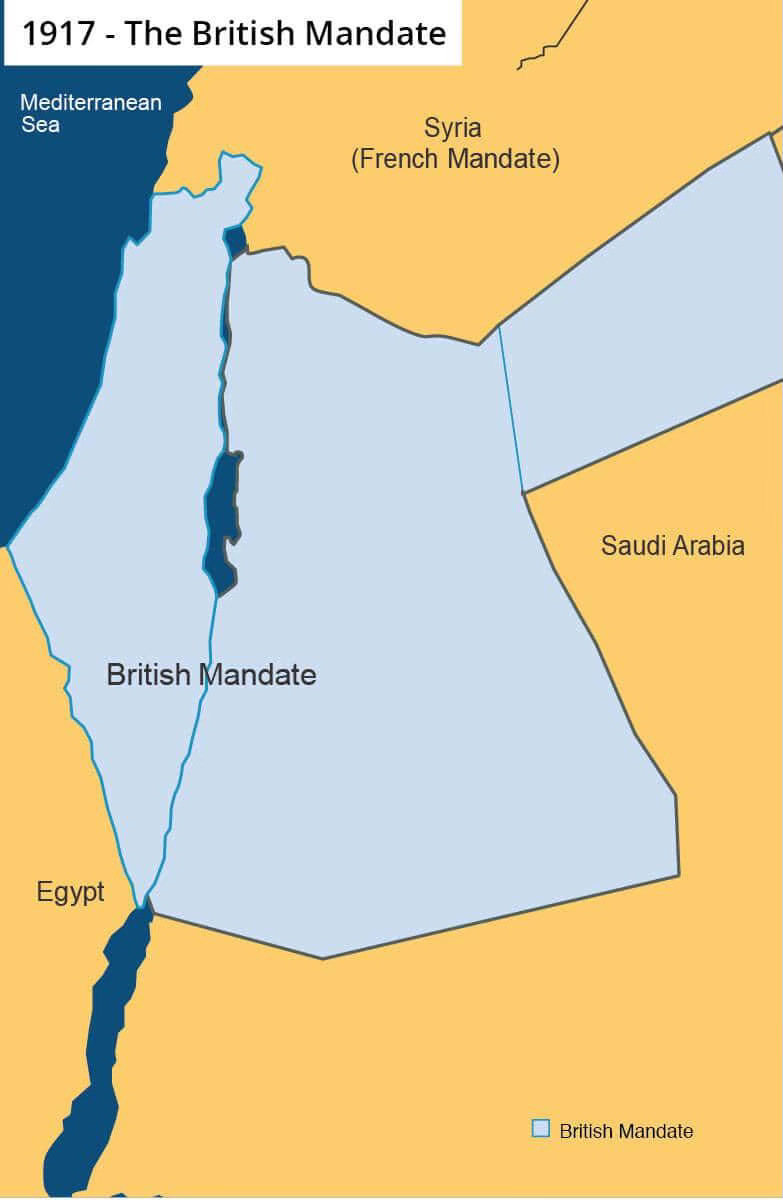
As a result of the end of World War I, the League of Nations gave the British a mandate to govern Palestine. It was in 1917 that the Balfour Declaration was issued, which sparked genuine hopes among the Jewish people that a Jewish homeland would be established in what was then Mandatory Palestine.
Source: Honest Reporting
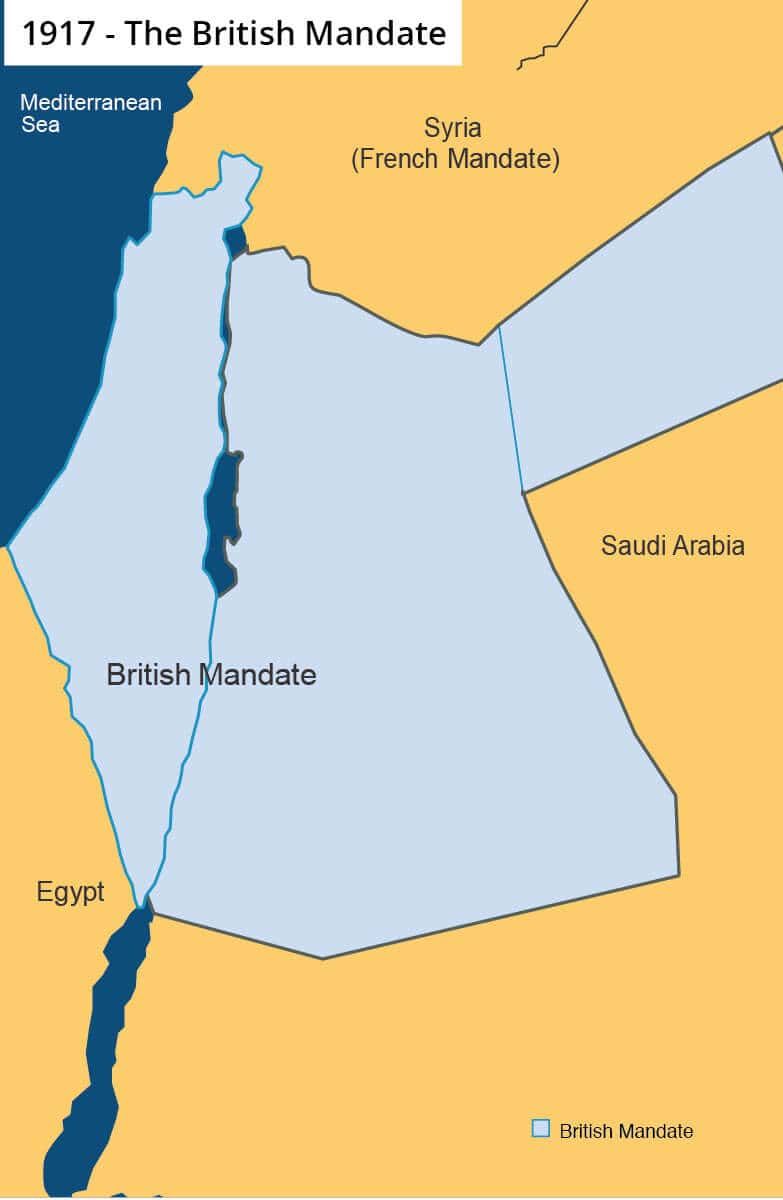
It should be noted at this point, Mr. Luxon, that at this time there was no ethnic group known as Palestinian. Indeed, when people referred to anyone as a Palestinian, they were generally referring to the Jews. There are people alive today who have identity documents from Mandatory Palestine, showing their citizenship as being Palestinian, with an ethnicity of Jewish.
From before the First World War, and with the establishment of the British Mandate of Palestine, Jewish immigration had been increasing. The increase in pogroms in Russia and Eastern Europe had been a significant impetus for immigration. A lot of Ashkenazi Jews had chosen either to go to the United States of America or to Palestine.
Around this time, Tel Aviv was founded on the shores of the Mediterranean, and significant development took place in what had previously been barren, unused land. Substantial tracts of Ottoman lands were purchased from absentee owners, and the new Jewish owners set about transforming them into productive farms. These ventures began to succeed, and the demand for labour outstripped the number of immigrants arriving.
Arab immigrants also entered the land, and the numbers of both Jews and Arabs increased. There was, of course, tension in some areas, but in many parts of the Ottoman territory, and then after the war, the mandate, Jews and Arabs worked, if not side by side, at least near each other. However, as the 1920s progressed, there were massacres and killings by Arabs against the Jews, and it was clear that conflict was inevitable.
The Peel Commission
In 1936, a full-scale Arab rebellion broke out, which was subsequently suppressed by the British.
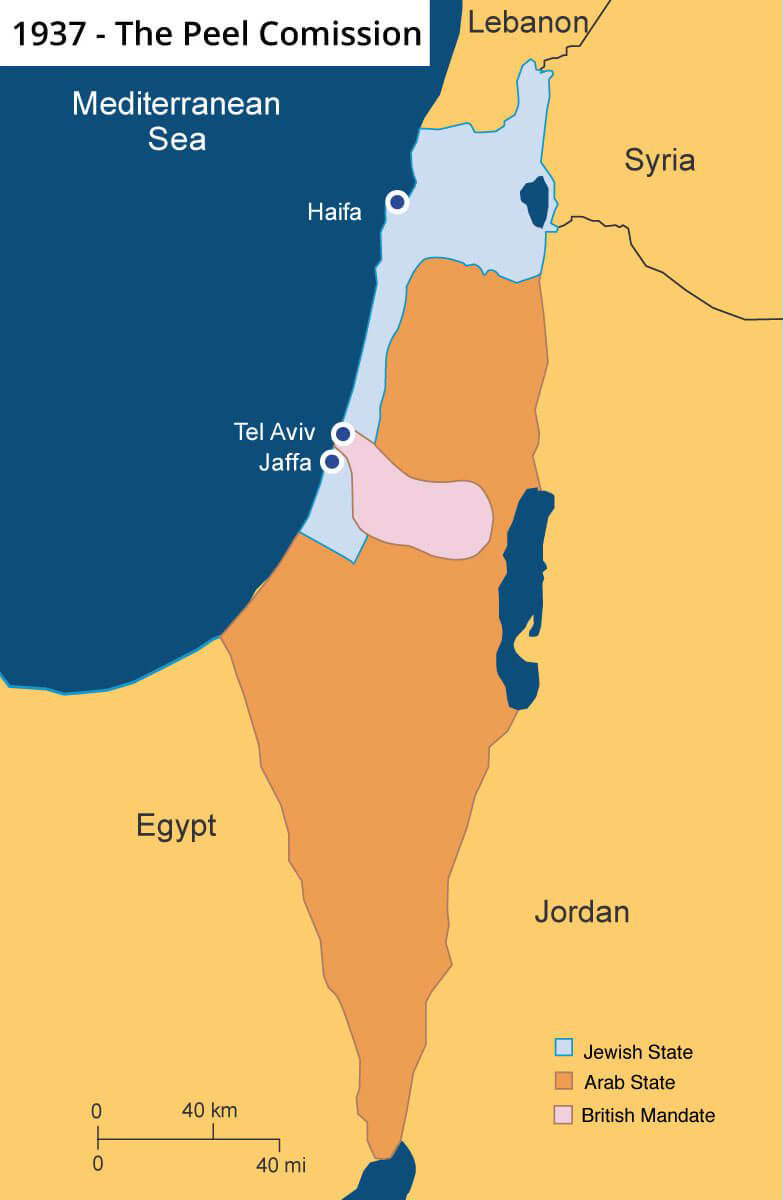
In 1937, the Peel Commission, named after its leader, Lord Peel, the grandson of the famous Sir Robert Peel, later Lord Peel and Prime Minister of the United Kingdom of Great Britain and Ireland, and founder of modern policing, completed an inquiry and gave a report. One of the recommendations was the partition of Mandatory Palestine, with the Arab side receiving most of the land and a population transfer to ensure that Jews lived in the Jewish state and Arabs in the Arab state. It was the Peel Commission's recommendation to His Majesty's Government that approximately eighty-five percent of Mandatory Palestine, outside of that which had been promised to the Hashemite family and which became Transjordan (now Jordan), should be set up as an Arab country. The remainder should be made a Jewish state.
Source: Honest Reporting
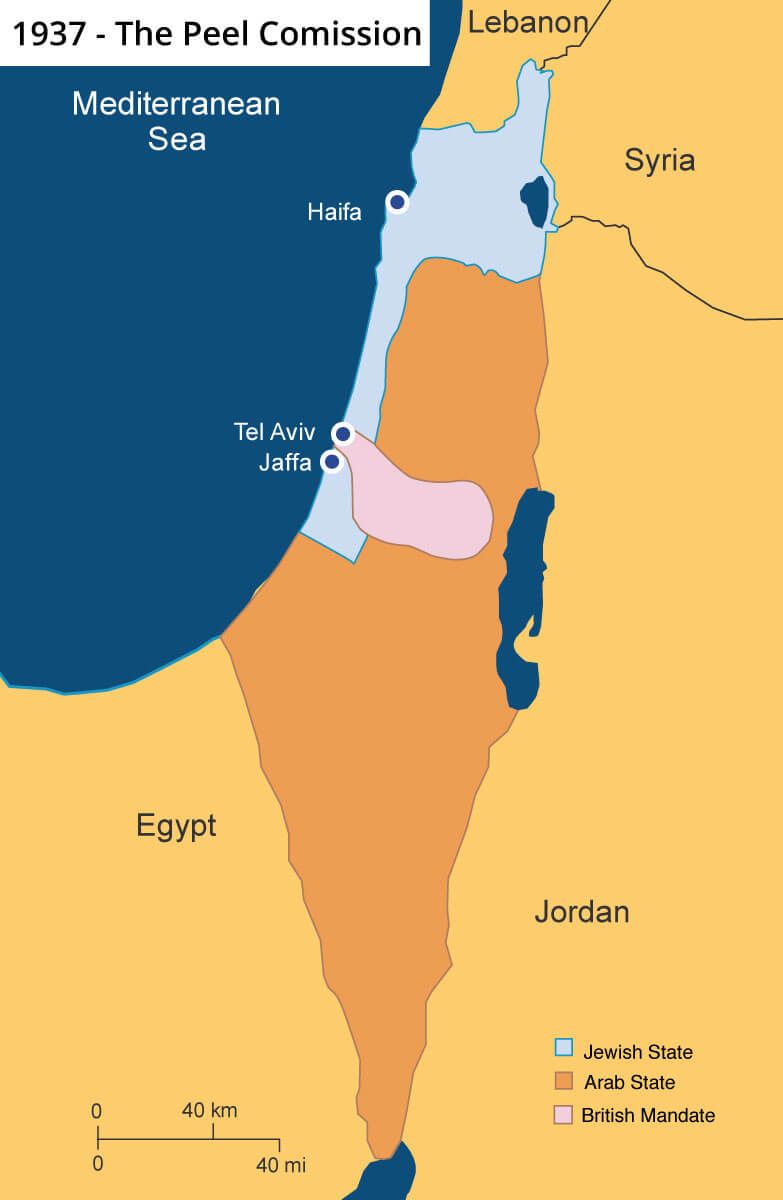
Jerusalem would be administered as an international city, still under the British mandate, and would be overseen by the British for the benefit of the entire world.
The Jewish Agency grudgingly and with great disappointment accepted this proposal. They figured that any state was better than no state at all. The Arabs rejected the proposal outright. Any Jewish state of any sort was unacceptable to them. So the mandate continued as before.
Over the following ten years, there was continued deadly violence by Arabs against the Jews. It is well known that some elements of the Jews, especially the Irgun and the Stern Gang, resorted to terror both against Arabs and the British at the same time. When World War II broke out, a significant number of Palestinian Jews volunteered to fight with the British. Even though fighting for the British risked their lives, not just in battle, but, if captured by the Germans, upon discovery that they were Jewish, they would be executed out of hand. The Arabs of the Palestinian Mandate, on the other hand, almost entirely supported the Nazis. The Arab leader, Haj Amin al-Husseini, spent time in Egypt and Iraq before going to Germany and working with Hitler and raising a Bosnian SS Legion to fight for the Germans. To this day, the admiration of the Arabs of the former Palestinian mandate for Adolf Hitler is well known, and Mein Kampf is sold in bookshops in the Palestinian Authority territories.
When the genocidal intent of the National Socialist German Workers' Party and its leader, Adolf Hitler, became better known, and the concomitant support for the genocidal intentions by the Arabs of the Palestinian mandate became clear to the British authorities in Jerusalem, it was decided to restrict Jewish immigration to the Palestinian mandate even more heavily. The methods used by the British to suppress Jewish immigration to the mandate at a time when it was most needed were, at times, brutal. Instead of allowing the Jews of Europe to flee to their ancestral homeland and to safety, the British stopped the path altogether and, by doing so, likely condemned millions to the gas chambers.
The West still has not had its reckoning over its mistreatment of the Jews in the face of the Nazis’ openly genocidal actions before and during the Second World War. In the year 2025, there are still fewer Jews alive than there were in 1939 because of deliberate decisions of the Allied nations, especially the United Kingdom, both before and during World War II.
Partition
At the end of the Second World War, the British still had a mandate to rule Palestine. Transjordan had been set up on the eastern bank of the Jordan River, and the situation between the Arabs and the Jews was becoming ever more fractious. Eventually, the British gave up and asked the United Nations to resolve the issue. To everyone's surprise, it did. We know now that this was in part because the Soviet Union had thought that it would be to the USSR's advantage to have a Jewish state. Accordingly, another commission was instituted, and a partition plan was drawn up.
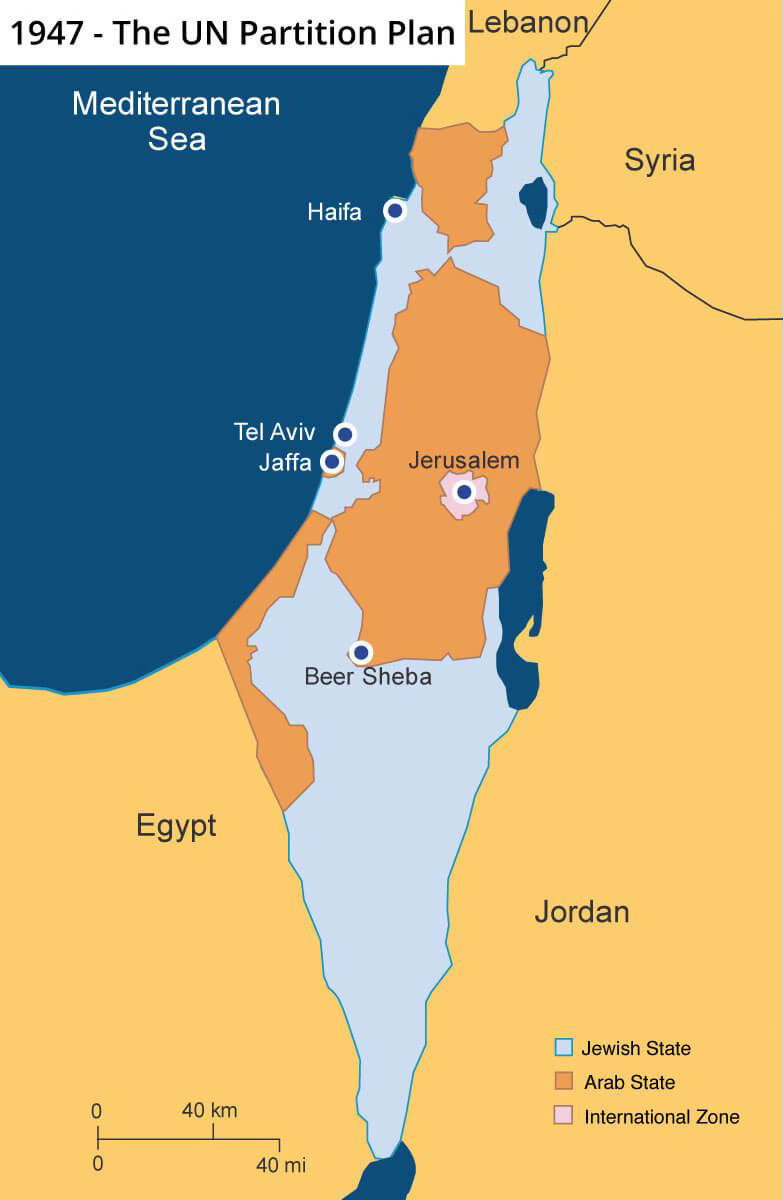
Despite the restrictions on immigration by the British, both natural increase and very determined illegal immigration practices had seen the Jewish population grow significantly in the decade since the Peel Commission. Therefore, the UN Partition Plan had to propose vastly different borders for the Jewish and Arab states. The Commission decided that the Jewish state would include the Eastern Galilee, the coast from Haifa to Rehovot, and most of the Negev. The Arab state, on the other hand, would comprise the central and western Galilee, Acre, the high ground of Judea and Samaria, Jaffa, and the southern coast, from north of Ashdod to the Egyptian border, including the Gaza Strip. Jerusalem would be placed under international control.
This plan’s proposed Arab state comprised 43 per cent of Mandatory Palestine, including all the high ground, one-third of the coastline, and control of all the main aquifers. On the other hand, the Jewish state comprised 56% of the land mass, but most of it was located in the barren Negev Desert, unsuitable for either urban or agricultural development.
While the plan did its best to separate the Jewish and Arab populations, there was going to be a sizeable Arab minority in the Jewish state (45%), and an insignificant Jewish minority (just one per cent) in the Arab state. The plan dictated that the Jewish and Arab minorities would become full-fledged citizens of the states in which they lived.
The Zionist leadership accepted the Partition Plan. The Arabs, however, rejected it, stating that they “concluded from a survey of Palestine history that Zionist claims to that country had no legal or moral basis.” They simply would not accept a Jewish state in the region and said outright that they would attack if the Jews attempted to establish a state, in order to destroy it.
Source: Honest Reporting
There was intense lobbying on both sides in the lead-up to the vote on Partition. Before the UN vote, Arab politicians had warned that if a satisfactory political solution to the Palestine case was not reached, severe measures should be taken against all Jews in Arab countries.1 The Arab League demanded the independence of Palestine as a unitary state, with an Arab majority and minority rights for the Jews. Nonetheless, on 29 November 1947, the United Nations General Assembly voted 33 to 13, with 10 abstentions and one absent, in favour of the modified Partition Plan, UN General Assembly Resolution 181. The Zionist movement rejoiced, while the Arab delegations to the UN walked out of the assembly, declaring the vote invalid, and threatening war if the partition was endorsed.2
On the afternoon of 14 May 1948, the British High Commissioner and his staff left Jerusalem and withdrew from what had been the British Mandate. The leaders of the Yishuv gathered in a hall in the Tel Aviv Museum. While others gathered outside, the Palestine Philharmonic Orchestra3 waited to play the national anthem. At 4 p.m., the dignitaries in the room rose and sang the national anthem of the new nation that was about to be declared. David Ben Gurion read out the Declaration of Independence, and Hatikva was sung once again. Ben Gurion then proclaimed, “The State of Israel is established, this meeting is adjourned”, and with that, the modern State of Israel came into being.
At the stroke of midnight on the 15th of May 1948, five Arab armies invaded the new State of Israel. The war that the Arab armies began was lost. The new Jewish state expanded its borders beyond those initially outlined in the Partition plan. All of the Jewish settlements within the Arab-controlled areas had been destroyed. And many of the Arabs who lived within areas that had come under Israeli control had fled. The war created some 700,000 Arab refugees, although a significant number of Arabs remained within the borders of the new state of Israel. At the same time, some 500-600,000 Jews were expelled or forced to flee from Arab lands nearby and made their way to the new state.
An individual armistice was signed with each of the Arab states, and the two largest Arab countries claimed their share of the reward. Egypt occupied the Gaza Strip and held it as part of its negotiated settlement. The Arab Legion, the military forces of Jordan, controlled large parts of Judea and Samaria and had forced its way into Eastern Jerusalem. King Abdullah sought to maintain his control over those areas, and Israel was unable to dislodge the Legion. What is today commonly referred to as the West Bank came into being under Jordanian control. However, Jordan’s first act after the ceasefire was not nation-building within its new territory; it was revenge. The Arab Legion went on the rampage and desecrated everything that it could find of value to the Jewish people:
All but one of the 35 synagogues within the Old City were destroyed; those not completely devastated had been used as hen houses and stables filled with dung-heaps, garbage. and carcasses. The revered Jewish graveyard on the Mount of Olives was in complete disarray with thousands of tombstones broken, some of which were used as building materials for roads and latrines. Large areas of the cemetery were leveled to provide a short-cut to a new hotel. Hundreds of Torah scrolls and thousands of holy books were plundered and burned to ashes.
Not content with desecrating everything Jewish, King Abdullah then held the Jericho Conference in December 1948 and reached an agreement with his new subjects. In 1950, Jordan annexed the newly won territory and renamed it the West Bank. This annexation was undertaken at the ‘request’ of delegates at the Jericho Conference of 1948. The Gaza Strip, on the other hand, was nominally made into the centre of a Palestinian state under Hajj Amin al-Husseini, the unreformed Nazi, ‘supported’ by everybody but Jordan. But it still wasn’t in any way an acceptance of the Partition.
An Interlude: The Uti Possidetis Iuris Doctrine
One critical issue that regularly fails to be considered is the fact that the Arab inhabitants of the Mandatory Palestine rejected the UN partition plan. The refusal by the Arab inhabitants to take up the offer of partition and the withdrawal of the British from that territory did not automatically create a state of Palestine. Had the Arab armies not invaded at midnight on the 15th of May 1948, it would have left a large part of the former British mandate as an unoccupied, unadministered, ungoverned area.
Of course, there was an invasion, and Jordan claimed a large part of what was intended to be the partitioned Palestinian Arab state. Well, Egypt claimed the Gaza Strip. As I mentioned above, Jordan immediately set about consolidating its position, and the rest of the Arab world was alarmed by this. So, they set up Hajj Amin to lead a Palestinian Arab state (well, a second one, Jordan being the other), claiming the entirety of the partitioned area, including that on which Israel was supposed to exist.
First, Hajj Amin al-Husayni was unanimously elected as President of the Council. Second, the Council passed a vote ofconfidence in the government headed by Ahmad Hilmi and endorsed its plans for the liberation of Palestine. Then a long series of resolutions waspassed, including the adoption of a provisional constitution, the originalflag of the Arab Revolt of 1916, and Jerusalem as the capital. Finally, a declaration of independence was signed by the delegates and issued to the press. It asserted the right of the Palestinian people to a free, sovereign, and democratic state with borders defined as "Syria and Lebanon in the north, Syria and Transjordan in the east, the Mediterranean in the west,and Egypt in the south.4
So the partition plan itself, as set out in UN General Assembly Resolution 181, has never been accepted by anyone other than the Palestinian Jews. Which leads to the question, who was responsible for the land that was supposed to go to the Palestinian Arabs?
Well, this is where the Uti Possidetis Doctrine comes in. This is an old doctrine, which essentially says that a successor state inherits the entirety of the land within the boundaries of its predecessor. It is a well-established doctrine that remains applicable today, particularly in Latin America and Africa. There is an acknowledgement within international law circles that this doctrine certainly applies to the question of the former Palestinian Mandate.
What it means is that the modern-day state of Israel is the successor state to the British mandatory government. And therefore, as a matter of international law, it inherits the entirety of the borders of the British mandate as of midnight on the 15th of May 1948. What is popularly called the West Bank, but is more accurately called Judea and Samaria, and also the Gaza Strip, as a matter of pure international law, is in fact sovereign Israeli territory. Now, I acknowledge that there is an International Court of Justice opinion to the contrary on this matter. But without getting too far into the weeds of that opinion, it is fair to say that, as with the continuous UN General Assembly resolutions against Israel since 1949, there is much to say that the ICJ is, in fact, a political body and not a judicial one.
1964 and the PLO
In 1964, Yasir Arafat, an Egyptian-born Palestinian Arab, founded the Palestine Liberation Organisation. With the assistance of the Soviet Union, he started a long war of terror against Israel, with side ventures against Jordan and Lebanon, among others. At the same time, Marxist groups such as the PFLP, which still exists and is not a prescribed terror organisation in New Zealand, also began to conduct operations. The Soviet Union favoured these groups due to their Marxist ideology. But after 1973, Arafat was seen as most able to achieve the goal of destabilising Israel.
1967 - 1990
The various belligerents continued the hostilities in a cold war with hot patches until 1967. At this point, with a build-up of arms by the surrounding Arab republics, Israel undertook what is widely seen as one of the finest preemptive strikes in history and defeated its enemies in the Six-Day War. As a consequence of its success, Israel gained the entirety of the Jordanian territory of the West Bank, the Egyptian territory of the Gaza Strip, and the entire Sinai Peninsula up to the Suez Canal.
Throughout the next twenty-five years, from the Yom Kippur War to the Lebanon invasion and the first Intifada, peace agreements were reached with Egypt and Jordan, which renounced their annexation of Judea and Samaria. Palestinian Arab terrorism continued to increase worldwide, often focused on killing Jews where they found them. Despite all of this, the rejection by the PLO and the states surrounding Israel of Israel’s right to exist continued. At this time, Hamas was founded, and the famous phrase that Palestine is Arab from the river to the sea was first heard.
The Oslo Accords and beyond
The Oslo Accords were finalised in 1993 and led to the award of the Nobel Peace Prize to Shimon Peres, Yasser Arafat, and Yitzhak Rabin in 1994. It set out a comprehensive pathway to Palestinian autonomy, agreed to by the State of Israel. Although they did not explicitly culminate in a Palestinian state, the outcome of the accords was that by the time they were completed, every requirement for a state to gain recognition would be in place. As such, it would be almost impossible for the world to deny what is now the Palestinian Authority's recognition as an actual national entity.
However, Yasir Arafat was playing for time, not for a state. Here is what Bill Clinton has to say about it:
Yasser Arafat didn’t tell me the truth which was that he promised me he was going to accept the peace deal that we had worked out. which would have given the Palestinians a state on 96% of the West Bank and 4% of Israel, and they got to choose where the 4% of Israel was. So they would have the effect of the same land of all the West Bank. They would have a capital in East Jerusalem. They would have the… I can hardly talk about this… and they would have equal access, all day, every day, to the security towers that Israel maintained all through the West Bank up to the Golden House. All this was offered, including, I will say it again, a capital in East Jerusalem, and two of the four quadrants of the old city of Jerusalem. confirmed by the Israeli Prime Minister Hud Barak and his cabinet. And they said no.
Since then, however, further negotiations have led to increasingly larger offers by the Israeli government, with greater autonomy by the Palestinian Authority and more land. Ultimately, it led to the best offer that the Palestinian Arabs were ever going to get.
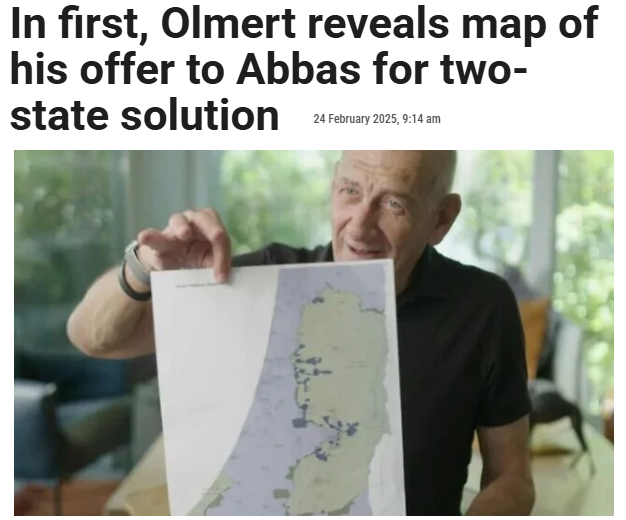
In 2008, Ehud Olmert, then Prime Minister of Israel, made another spectacular offer to Mahmoud Abbas, the President of the Palestinian Authority.
Olmert and Abbas met in Jerusalem on September 16, 2008.
At the table, Olmert showed the map to Abbas and implored him “Sign it! Sign it, and let’s change history!” he said.
“Prime Minister, this is very serious. It is very, very, very serious,” Abbas said in response, Olmert recalled….
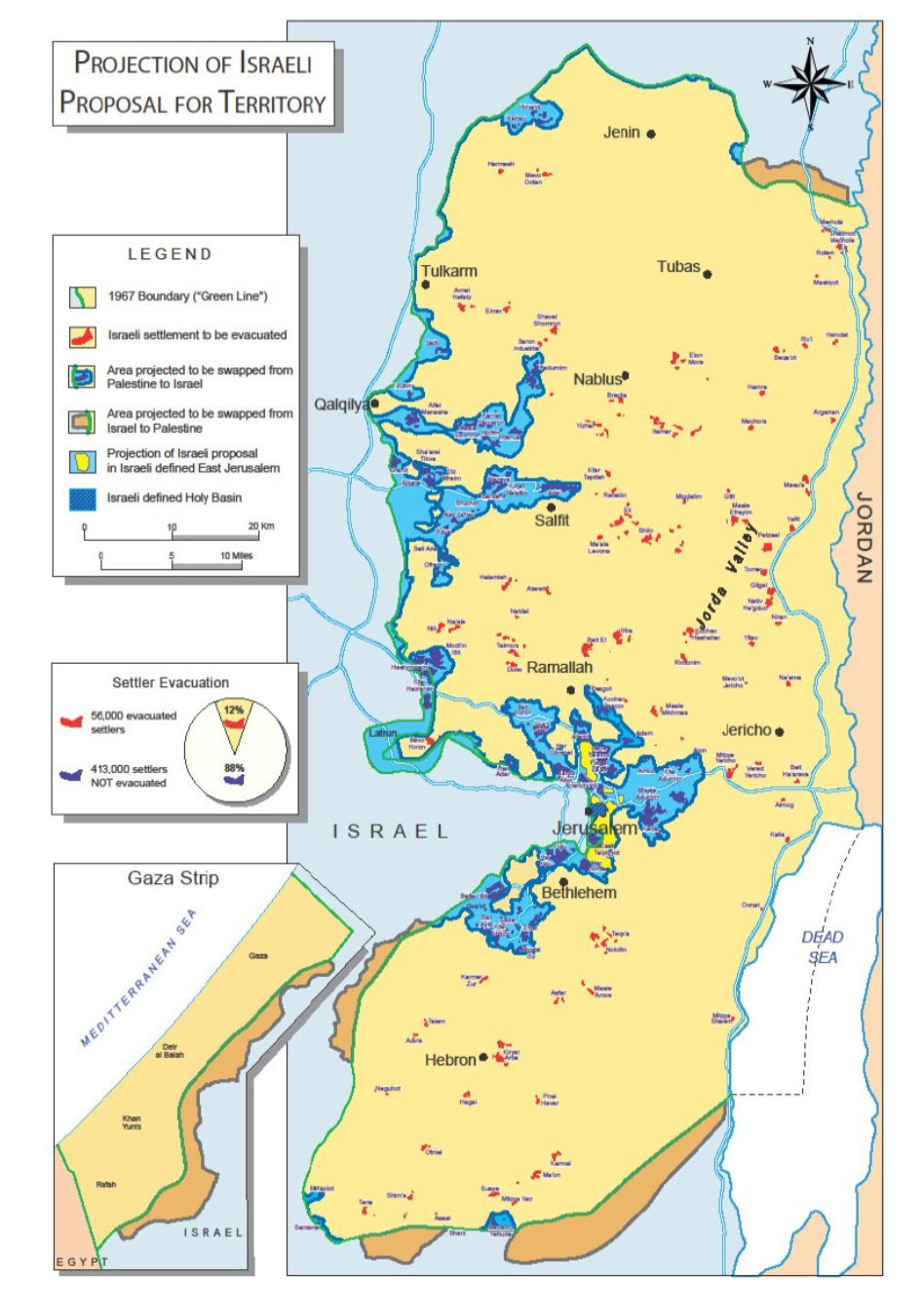
Olmert’s proposal included annexing 4.9 percent of the West Bank to Israel, which would give up a similar area of territory from areas near the West Bank and Gaza Strip to be included in the Palestinian state.
The swap would leave major settlement blocs in Israel, but also require evacuating dozens of smaller settlements.
In addition, Olmert offered to divide Jerusalem, with both Israel and the Palestinians having separate parts as their capital and a “holy basin” — including the Old City and its Temple Mount — to be administered by a committee from Israel, Palestine, the US, Saudi Arabia, and Jordan.
A tunnel or road would join the West Bank to Gaza, which at the time was already under control of the terror group Hamas….
As the meeting drew to a close, Olmert refused to give the map to Abbas unless he first signed a copy. Abbas declined, insisting he needed to study it first with his own experts.
Instead, they agreed to hold a follow-up meeting the next day.
“We parted, you know, like we are about to embark on a historic step forward,” Olmert said in the film.
It would have been “very smart” for Abbas to sign, he insisted, because that way, if a future Israeli leader backed out of the deal, he could have blamed the failure on Israel.
Here is a better picture:
A History of Rejection
A state has been offered to the Palestinian Arabs on a regular basis since 1937. They have been offered varying portions of land, ranging from 85% to 45% and less, depending on when the negotiations and discussions took place. After all, what is an offer must accord with present reality. Each time, the Arab leadership has rejected the offer because it left Jews present in the area. Even today, under Mahmoud Abbas, it is accepted that a Palestinian state will be entirely free of Jews. Over the years, five concrete offers have been made to the Arab residents of the former mandate, which have been rejected. There have been two informal but strong offers, and numerous efforts have been made to bring the PLO and Arab League leadership to the negotiating table. Every time, the stumbling block has been the presence of Jews in Israel.
For the record, here is the list of definite offers:
1937: Peel Commission Partition Plan (Formal)
1947: UN Partition Plan (Resolution 181) (Formal)
1967: Post-Six-Day War Overtures (Informal)
1978: Camp David Accords (Palestinian Autonomy Framework) (Informal, as it pertained to Palestinians)
2000: Camp David Summit (Formal)
2001: Taba Talks (Formal)
2008: Annapolis Process and Olmert-Abbas Talks (Formal).
Each time, the Palestinian leadership has rejected the chance of their own state. Even worse, in 2005, under the leadership of Ariel Sharon, Israel withdrew entirely from the Gaza Strip, right down to digging up every Jewish corpse in every cemetery and removing them. There was no Jew left in Gaza, living or dead. The first thing the Palestinian Authority did upon the Israeli withdrawal was to hold a victory parade. For the next eighteen years, Gaza was independent. And the elected government of the Palestinian Authority, Hamas, chose to use that autonomy, that independence, to fire rockets into Israel and to ultimately launch a genocidal attack. The cost of which has been enormous.
The Consequences of Recognition
In recent days, the United Kingdom and the Republic of France have recognised a Palestinian state, as have Canada and Australia. They have all been at pains to say that Hamas does not benefit from this recognition, yet for every act of recognition, Hamas has thanked the recognising state and claimed victory. Mahmoud Abbas and the Palestinian Authority have made it clear that they see this recognition as a positive outcome from the 7th of October attempted genocide. But these actions are not symbolic. They do not just show a desire for peace; they have consequences and obligations upon parties that recognise the state of Palestine.
The criteria for statehood were established in 19335. Four elements must be satisfied: a permanent population, clearly defined territorial boundaries, and a government—presumably the Palestinian Authority, which runs the West Bank—that must be capable of conducting international affairs. The borders, while disputed, are broadly understood to be somewhere within the territories that were seized in 1967 in the war with the Arab states.
So the first question that must be answered is: Does the state of Palestine even qualify? Well, the area has a permanent population. And that’s about where you get to. You see, it doesn’t have a clearly defined territorial boundary. There is the Gaza Strip, which, regardless of what anybody says, nobody wants. If you look back at the historical maps of ancient Israel, you will see that the ancient kingdoms never possessed the Gaza Strip. And it is very clear that even today, nobody wants the Gaza Strip. So we have a population and little else.
The Palestinian Authority is the titular government that most national governments deal with. However, there has not been an election for the Palestinian Authority since 2006. This is where we get the famous slogan that Mahmoud Abbas is in the 19th year of a four-year term. The reason why there hasn’t been an election in the Palestinian Authority in that time is straightforward: Hamas would win. Hamas is currently the majority party in the Palestinian Authority, and the only reason that it does not rule in the West Bank as well as in the Gaza Strip is that it cannot access the West Bank effectively.
Worse is the fact that the Palestinian Authority is effectively a terror state government, which is more focused on the fight with Israel than on actually building a nation-state. It is every bit as genocidal as Hamas, it is just less overt about it. Why else would you have a sign like this at the edges of the Palestinian Authority-ruled parts of Judea and Samaria?
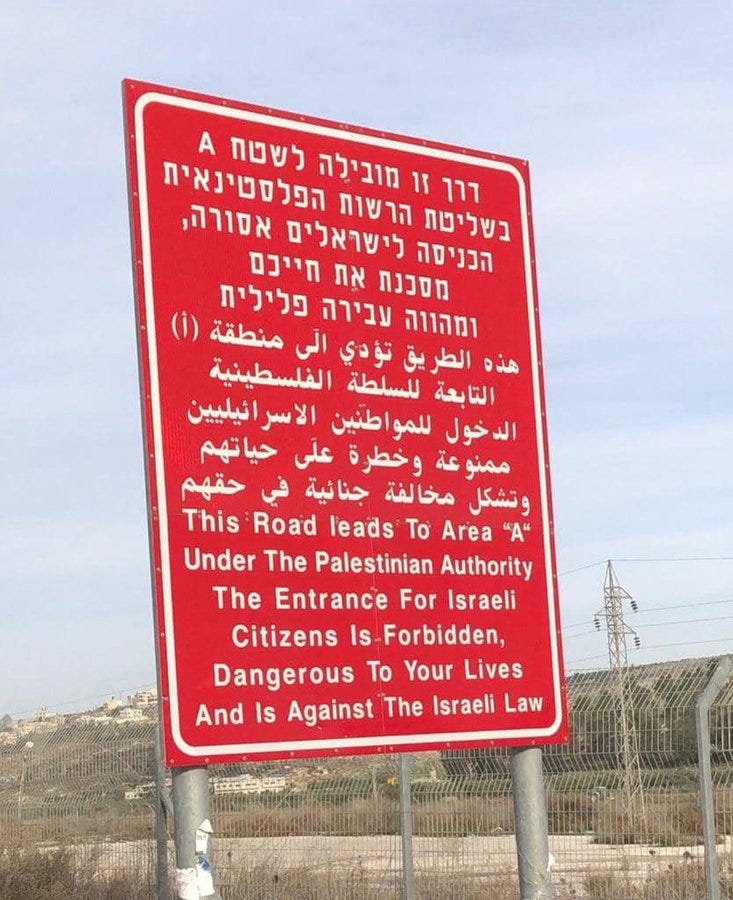
How many countries do you know that have signs warning their citizens not to go to the country next door, as it is dangerous to their lives?
Then we come to the elephant in the room, Hamas. Mr. Luxon, you have said that Hamas can play no role in the government of the state of Palestine. This has been echoed by Mr. Albanese, Mr. Carney, Sir Keir, and every other world leader immediately before they recognised the state of Palestine. There is just one problem with saying that. Once a country has been recognised, no other country can put any restrictions upon who plays a role in its government. If the people of the state of Palestine want Hamas to be their government, Hamas can be their government, and there’s nothing anyone can do about it. Hamas, of course, rejects any idea that they won’t be a part of any future government of Palestine.
Husam Badran, a senior leader in Hamas, called Mr. Starmer’s announcement “a step in the right direction, even if it came late.” But in a text message to The New York Times, he rejected the British demands that Hamas have no political role in a future Palestinian state.
Indeed, Hamas declared ‘victory for the justice of its cause’ after Sir Keir Starmer announced the UK’s recognition of a State of Palestine.
All of these world leaders then go on to say that the recognition of a state of Palestine is no reward for the actions of October 7. They are then directly contradicted by every single person with any connection to the terror forces of the PLO or Hamas. Or anyone else with half a brain.
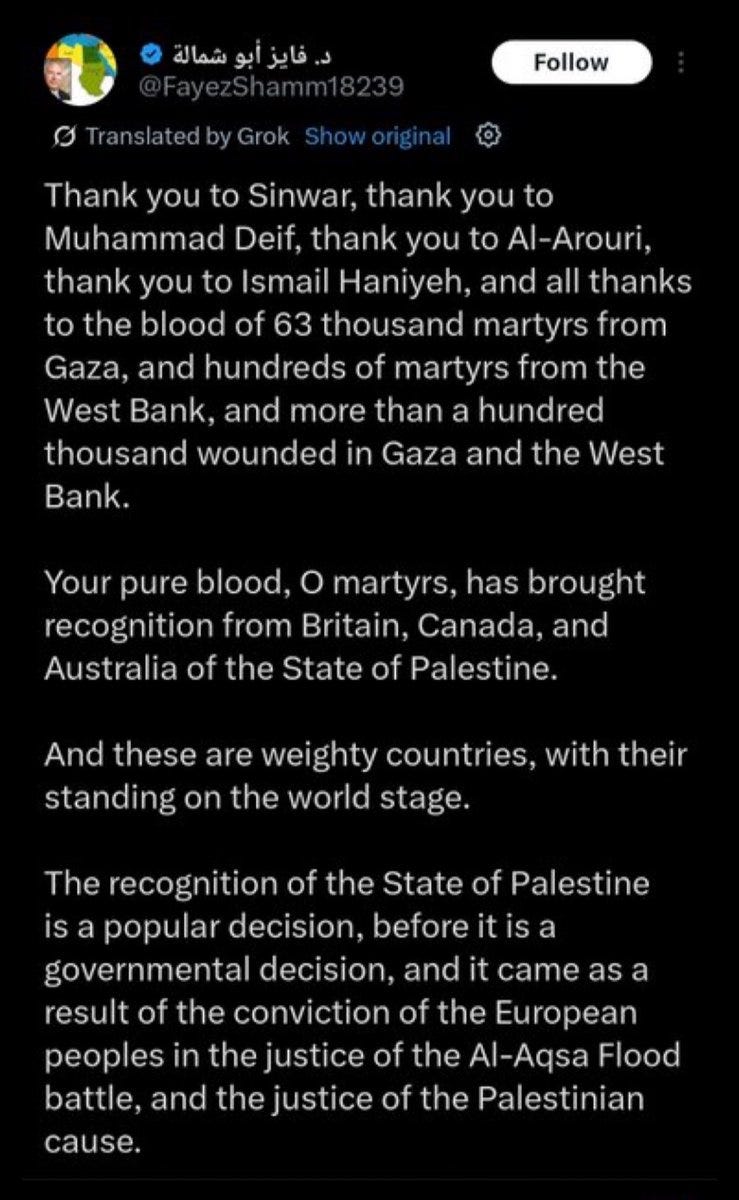
In case you are wondering, this is also the view of Mahmoud Abbas. We know this because:
In an interview published last Sunday by the Palestinian Authority’s official daily, Al-Hayat Al-Jadida, and exposed by Palestinian Media Watch, Abbas described the attack in terms that focused on its “strategic impact” against Israel, ignoring the casualties and the hostages.
“On October 7, 2023, Hamas launched a sudden attack... killed 1,200 Israelis, abducted 250 others, and took them as hostages. This attack shook the foundations of the Israeli entity,” Abbas stated in the interview, which originally took place a few months ago, but is now being published as part of a series of articles, providing a glimpse into a new book that will be published about Abbas’s life and work.
Abbas highlighted what he characterized as Hamas’s achievements, saying the operation “exposed the [false] claims that... it has an invincible army” and revealed “the glaring failure of this entity’s components, especially the army and the various security forces.”
Abbas also stressed Israel’s failure “to discover what Hamas was planning and to block the attack and prevent heavy losses,” framing the intelligence failure as a strategic victory for the Palestinian cause.
The PA chairman’s only criticism of the October 7 attack centered not on its brutality, but on its consequences for Gaza residents.
“As important as the goals that Hamas attempted to achieve through this attack may have been, they are not comparable to the damages and heavy losses that the Gaza Strip residents... have suffered,” Abbas said.
Adding to the controversy, Abbas’s senior adviser Mahmoud Al-Habbash recently defended the October 7 attack as “legitimate resistance” in a March interview, stating five times that “resistance is legitimate” and declaring that “what happened on October 7 is a legitimate thing,” also focusing on its implications – rather than the violent terrorist acts.
Isn’t it nice to know that the President of the Palestinian Authority, whom the world is thrusting legitimacy upon, so approves of Hamas’ actions on the 7th of October 2023? Of course, this is the man whose government even today pays the families of terrorists who have managed to kill Jews. It’s the program commonly known in the West as Pay to Slay, and it has taken money given to the Palestinian Authority as aid money from foreign governments, possibly including New Zealand, and funnelled it to support the families of terrorists who have been confirmed as having killed Israeli citizens simply for being Jewish.
But there is a bit more:
A major consequence of recognizing Palestinian statehood is that it provides a basis for “a complete revision of bilateral relations with Israel,” saidArdi Imseis, an associate professor at Queen’s University Faculty of Law in Ontario and a former United Nations official…. [f]or example, if an aspect of trade aids or assists Israel in violation of the rights of a Palestinian state, then the recognizing nation would have to cease that exchange…if, for example, a country that recognizes a state of Palestine imports agricultural products from farms belonging to settlers in occupied territories, those agreements would be aiding and abetting the commission of a wrongful act, he said.
That said, apparently, New Zealand doesn’t do much trade with Israel. Also, the Christchurch City Council tells me. So apparently, this won’t be much of a problem for us. You see, when it comes down to it, for New Zealand governments anyway, it seems that our principles depend upon whether it costs us money or not.
Right and Wrong
This brings me to the last part of why New Zealand should not recognise the state of Palestine. And that is simply that it is wrong to do so.
National Party-led governments tend to view themselves these days as being tough on crime. And yet, here we have a situation where a terrorist group that has run an autonomous area, free of Israel’s intervention, but has spent billions of dollars digging and outfitting tunnels at the cost of the development of the people it was elected to lead, for the purpose of launching a genocidal attack against Israel. It has made its leaders billionaires. We know that when Ismail Haniya was killed in Tehran, his net worth was roughly four billion dollars. And yet, when he went on television and was asked how Hamas could justify not looking after the residents of Gaza, Haniya said that was the job of the UN.
We know that the purpose of the attack on 7 October was genocidal because Israel has gathered sufficient information from Hamas to show that it was expecting Hezbollah to join the attack and meet it in the middle.
We know that Israel stands accused of not feeding the residents of Gaza, and yet, that itself is a lie. We know that 70% of the aid distribution in Gaza today is by non-United Nations NGOs, while 30% is through the United Nations. Of that, 100% of the GHF trucks carrying aid reach their destination and deliver directly to civilians. But according to the UN, only 12% of their trucks reach their destination without being diverted. Worse, the UN only considers their own trucks to constitute aid; if it comes from Israel or the US, then it does not count.6
But this is the data, this is the information that MFAT is giving you, Mr. Luxon. This is the information that the media is telling the people of New Zealand. And it’s all lies.
What Hamas did was an attempted genocide. Every death, every injury, every horror that is happening in the Gaza Strip must be laid at the feet of Hamas and its allies. It must be laid at the feet of Hamas’s sponsors, Qatar and Iran. And now it must be laid at the feet of those countries who, by giving succour and moral support to the Palestinian cause, prolong this war. Hamas could end this war today by releasing the hostages. Instead, every time another country recognises the state of Palestine, Hamas is emboldened, and this war is prolonged.
This two-state solution is dead. The Palestinians don’t want it if it means Jews are remaining in Israel. Moreover, New Zealand should not recognise a state that allows its citizens to so casually murder the citizens of the country next door simply because of their ethnicity. But more simply, this is a matter of right and wrong.
New Zealand should stand on the side of right and justice.
In this war, the side of right and justice is the side of Israel, and we should stand with them.
In May 1946, a summit of Arab Heads of State at Inshash resolved that Palestine must remain Arab and that Zionism constituted a threat, not only to Palestine but to the other Arab states and to all the peoples of Islam. The following month, at a Special Arab League meeting, delegates secretly decided to help the Palestinian Arabs with funds, arms, and volunteers should it come to an armed struggle. Benny Morris, 1948, p66
Ibid, pp 65 & 66
Oddly enough, made up of Jews.
Avi Shlaim, The Rise and Fall of the All-Palestine Government in Gaza, 20 J. PALESTINE STUD. 37, 37–53 (1990), 43
It is the Montevideo Convention, if you were wondering.
Which is how 2 million tons of aid getting through to 2 million people can be classed a ‘famine’.